Reading / 03 / Display refresh
The rhythm
of a screen
A moving image is a sequence presented over time. The screen and the image source each contribute their own timing.
An educational technology note.
01Two rates, two jobs
Frame rate describes how many images are produced or supplied over time, commonly expressed in frames per second. Refresh rate describes how often a display updates, commonly expressed in hertz. They concern different parts of the journey from an image source to a visible picture.
A screen capable of frequent updates cannot create new source detail merely by repeating the same frame. Equally, producing more frames than a fixed-rate screen can show does not mean every complete frame will appear. Understanding the relationship is more useful than comparing the numbers in isolation.
Hypothetical teaching example
One picture, shown again
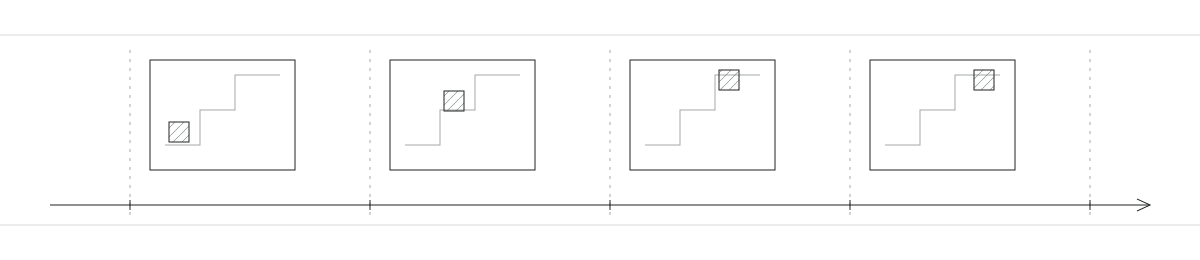
Imagine a source that supplies 30 evenly spaced frames each second and a screen that refreshes 60 times each second. In a simplified synchronized arrangement, each source frame can be presented for two refreshes.
The screen updates 60 times, but the source still contributes only 30 distinct pictures. This example leaves out buffering, scanning and processing delays to make the distinction clear. It is not a performance result for a particular display.
02Timing between the pictures
An average frame rate does not describe every interval between frames. Uneven delivery can make movement appear irregular even when an average looks high. The order and timing of events matter alongside their count.
Synchronization methods coordinate image delivery and display updates. Variable refresh rate allows a compatible display to adjust its update timing within a supported range. The available behavior depends on the display, connection, graphics hardware and settings. NVIDIA’s refresh-rate selection guide shows that this is a display-specific setting; it is not evidence of the behavior of every screen.
03A picture has other qualities
Refresh rate is separate from resolution, which describes the pixel dimensions of an image or display. It is also separate from pixel response, which concerns how quickly a pixel changes its visible state. Those properties interact in the viewing experience but answer different questions.
When reading a display specification, first identify what is being measured. Then consider the source material and the conditions of use. A still document, an animated interface and a moving camera scene place different demands on the image path. One prominent specification cannot summarize them all.
These concepts describe technology in general. They do not describe activities or services of STYLECRAFT PLUS LLC.